A dental practice website in Canada has the same job as any good practice site: show who you are, what you treat, where you are and how to book. It also has to stay inside the advertising rules your provincial dental regulator sets, and most website templates were never written for them. In Ontario, for example, patient testimonials are not permitted in a dentist’s advertising, and neither are claims to be better than other practices, which removes two things many dental templates are built around.
This guide covers the rules that shape the site, what they change on the pages, how patient privacy affects forms, email and photos, and what builds trust within the rules. It is general information, not regulatory or legal advice: your own regulator’s documents are the final word, and each one is linked below.
Your website is advertising, and the dentist answers for it
Ontario’s regulator, the Royal College of Dental Surgeons of Ontario (RCDSO), sets out its rules in a practice advisory on professional advertising, and that advisory covers websites and any material published by the dentist or by someone on the dentist’s behalf. In a 2025 reminder, the College said dentists are responsible for all advertising involving them or their clinic, and suggested giving the advisory to any outside firm that prepares it. Alberta’s regulator says the same in its 2023 advertising statement: owner, responsible and associate dentists must make sure all advertising complies, including what third parties produce for them. In practice, the dentist signs off on the website, not the web designer.
What Ontario’s rules take off a typical dental template
Ontario’s rules are the most detailed in writing, which makes them a useful checklist even outside the province.
- Testimonials. Patient testimonials are not permitted, and neither is any statement that can only be supported by someone’s personal opinion. The “What our patients say” carousel that comes with most dental templates has to go.
- “Best”, “leading”, “state of the art”. Claims of superiority or uniqueness are not allowed, and the advisory gives superlatives such as “state of the art” and “cutting edge” as examples.
- Implied specialties. Whenever the site mentions an area of practice, a procedure or a treatment, it has to say whether the dentist is a general dentist or a specialist, and in which specialty. RCDSO has said that titles such as “cosmetic dentist”, “implant specialist” or “holistic dentist” suggest a specialty the dentist may not hold, and that this applies to websites and social media.
- Free offers and contests. Giveaways, contests, draws and free products or services are not permitted, and the 2025 reminder lists reduced rates, bonuses and tiered programs among the incentives to avoid.
- Promises about results. Advertising must not create expectations of favourable results, and the 2025 reminder names guaranteed results and “risk-free” care as examples.
- Unclear fees. Fees may be advertised if they are stated clearly. Unless the advertisement says otherwise, an advertised fee is taken to be the maximum fee, including laboratory costs, for every patient, insured or not.
- Marketing paid per patient. A dentist must not take part in advertising where the fee paid to a third party depends on the business the campaign brings in, which rules out marketing deals priced per new patient.
Other provinces
- British Columbia. The BC College of Oral Health Professionals’ Standards for the Oral Health Team (version 2, 2026) require marketing to be accurate and not misleading, qualifications to be represented accurately, compliance with advertising, competition and privacy laws, and consent for any use of a patient’s images. Check the College’s bylaws and guidance too before publishing claims or patient photos.
- Quebec. The Ordre des dentistes du Québec’s social media guidelines say its advertising rules apply in full online, particularly to testimonials, which dentists must not use, encourage or refer to, and that items from a patient’s record, such as radiographs, need the patient’s explicit written consent before any use. A practice in Quebec also needs a complete French version of its site; our guide to bilingual websites for Quebec explains what that covers.
- Alberta. Beyond the responsibility rule above, the College’s statement restates that advertising must not be untruthful, inaccurate or misleading.
- Everywhere else. Every province has its own regulator. A site that passes Ontario’s list above and your own regulator’s rules is a safe starting point.
Booking, forms and patient privacy
- Booking comes first. Most visitors come to a dental site to book, call or find the address. Put the phone number, tappable on a phone, the booking link and the hours on every page, and the address with directions, parking and an accessible-entrance note on the contact page.
- Keep forms for scheduling. RCDSO treats a dentist as a health information custodian under Ontario’s health privacy law. The Information and Privacy Commissioner’s guidance on emailing patients asks custodians to encrypt email where feasible, to have a written email policy, to tell patients about it and get their consent before using unencrypted email, and to keep personal health information in each email to a minimum. A booking form that asks for a name, a phone number and a preferred time fits that guidance; one that sends symptoms or a medical history through ordinary email is much harder to square with it.
- Patient photos need written consent. RCDSO treats a patient’s image as personal health information: consent is needed in advance and has to be confirmed in writing once the patient has approved the image, even when the image does not identify them, and the image must come down if consent is withdrawn. Before-and-after galleries are built from exactly these images.
- Ask before adding a reviews widget. Ontario’s advisory does not say whether showing or linking to reviews from Google or other sites counts as a testimonial, so ask the College before putting them on the site.
What builds trust within the rules
- Each dentist’s name and qualifications, stated accurately: general dentist or specialist, and which specialty.
- Real photos of the clinic and the team, with the team’s consent, instead of stock smiles.
- Treatment pages that explain what happens, how long it takes, how to prepare and what aftercare involves: information, not promises.
- Fees or insurance information stated clearly, if you publish them.
- The languages the team speaks, how accessible the clinic is, and what to do in a dental emergency after hours.
- A site that loads quickly and reads easily on a phone, where most patients will find you.
The rules every business site shares, from privacy policies to accessibility, are in our checklist of website legal requirements in Canada.
Questions dentists ask about their website
How much does a dental website cost?
It depends on how much the site has to do: how many treatment pages it needs, whether online booking is tied to your practice software, whether it needs a French version, and who keeps it current. One cost dental sites carry that most others do not is the time to check every claim against your regulator’s rules before launch. Our plans are on the pricing page, and our guide to what a professional website costs explains what moves the number.
What makes a well-designed dental website?
One a patient can use in a hurry on a phone: the phone number and booking link on every page, treatment pages that say who provides each treatment, real photos of the clinic and the team, and nothing your regulator would object to. Lists of the best dental websites usually judge the look; patients judge how quickly they could book.
How we build dental websites
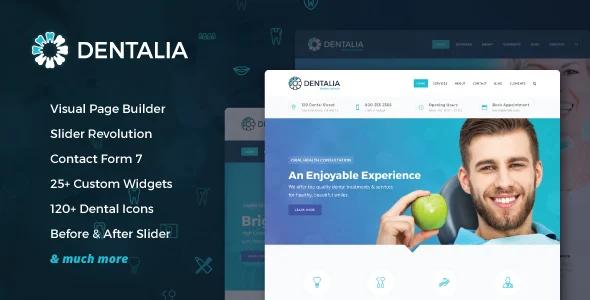
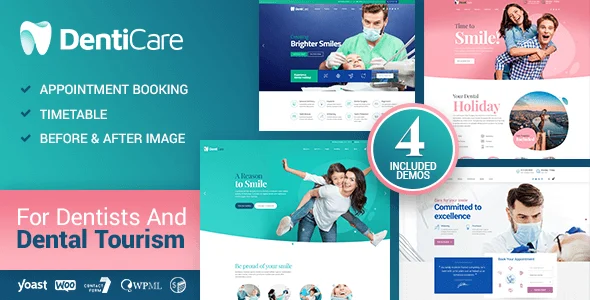
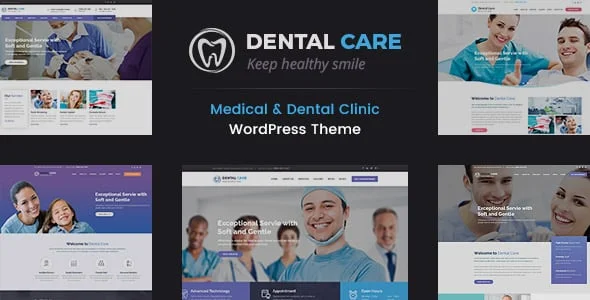
Our website design service starts from a design you choose, and our library includes more than fifty dental designs, most of them in the Health & Beauty section, such as Dentalia and DentiCare. Most of them come with a patient testimonial section and with headline copy written for markets with different rules. Every plan except Starter includes customizing the design with your own content, and on a dental site that is where those sections come out and the treatment pages get the general-dentist-or-specialist wording your regulator expects. To see what a customized design looks like as a finished site, our portfolio includes an illustrative concept for a dental clinic. What each plan includes is on the pricing page.
If you run a practice, tell us your province and how patients book today, and we will tell you what the site needs.